Design for
Manufacturing Services
We help your mental sketches
take solid form.
Optimize your product for efficient manufacturing and streamlined assembly—
reducing costs and accelerating production.
Better Designs Lead to Better Products
DFM ensures that your designs are optimized for efficient, cost-effective injection molding production and assembly. At Aprios, we focus on creating parts and assemblies that streamline the manufacturing process, reduce waste, and enhance quality. By carefully selecting materials and designing parts that align with the capabilities of both injection molding and 3D printing, we help you minimize production costs and lead times, delivering high-quality results that meet your needs and exceed your expectations.
Poor Design Decisions Can Lead To Costly Mistakes
Designing with efficiency in mind is essential to avoiding delays, controlling costs, and ensuring compliance. Early planning and expert guidance can help you identify potential pitfalls, streamline production, and set your project up for success.
MANUFACTURING DELAYS from avoidable design flaws.
INCREASED PRODUCTION COSTS due to material choices and manufacturing methods.
ASSEMBLY ERRORS AND LONGER BUILD TIMES from overly complex designs.
EXCESSIVE PARTS IN YOUR DEVICE leads to higher tooling, labor, and assembly costs.
REGULATORY COMPLIANCE RISKS if tolerances and validation aren't addressed early.
DFM for Injection Molding
Designing for injection molding isn’t just about shaping plastic, it’s about building manufacturability into every decision from the start. This page explores how DFM principles apply to injection molding across industries, including medical molding, where precision and repeatability are critical. You’ll see how details like wall thickness, draft, and material choice directly influence tooling, cycle times, and part performance. For teams working with injection molding in Minnesota, California, or beyond, this translates to fewer revisions, faster production ramp-up, and more predictable outcomes once parts move into manufacturing.
Free Design for Manufacturing in Injection Molding eBook
Learn About DFM
with Ray Schenk
Watch our Senior Engineer, Ray Schenk, discuss the value of Design for Manufacturing (DFM) in this insightful video. Ray explains how DFM principles enhance manufacturability, reduce costs, and improve product quality, providing our customers with efficient and effective production solutions. Discover how integrating DFM into your design process can transform your manufacturing outcomes.

Find the Right Material for Your Application
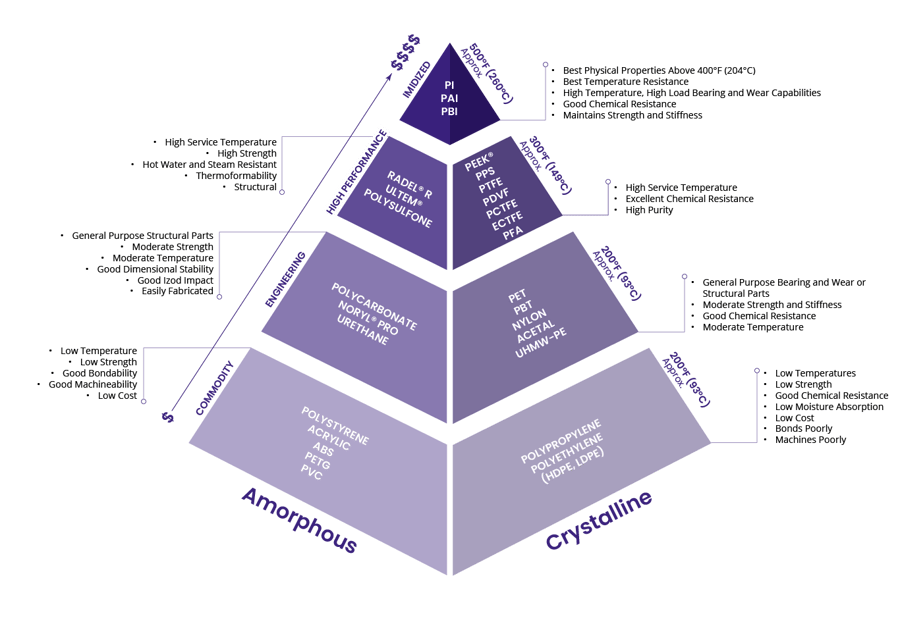
Material selection plays a critical role in injection molding manufacturability, performance, and cost. Aprios works with a comprehensive selection of thermoplastics, elastomers, and high-performance materials for injection molding and additive manufacturing.
Our material selection guide will help you:
- Browse materials by category, properties, and applications.
- Compare options for strength, rigidity, thermal resistance, and more.
- Understand which materials are best suited for your project’s requirements
Why Trust Us?
At Aprios, we know that great product design is about more than just function, and includes important details about manufacturability and efficiency. That’s why we take a collaborative, holistic approach, considering DFM, DFAM, and DFA, helping engineers reduce risk, cut costs, and speed up production without sacrificing quality.
“In addition to improving the manufacturability of the parts, Aprios made modifications to reduce scrap.”
“Some of the components are so intricate that we can’t take the work to anywhere else. I am confident in Aprios’ ability to work with us for continuous improvement and to meet growing production demand. ”
3 Steps To Smarter Manufacturing & Assembly
Experience smooth design optimization and seamless integration into your manufacturing process.

Submit Your Design
Upload CAD files for evaluation.

DFM Review
We assess manufacturability, assembly efficiency, and design optimizations.

Refine & Optimize
Collaborate with our experts to implement improvements.

Understanding the Boundaries of DFM
DFM is a powerful tool for enhancing manufacturability and efficiency, but it works best when integrated with comprehensive design, engineering, and quality control practices.
-
DFM Isn't a Substitute for Detailed Engineering and Product Development
While DFM optimizes designs for manufacturability, it doesn't replace the need for detailed engineering and thorough design work. It enhances the process but can't compensate for a lack of technical precision or thorough design validation.
-
DFM Isn't a One-Size-Fits-All Solution
DFM principles vary depending on the manufacturing method, materials, and product requirements. What works for injection molding may not apply to additive manufacturing, and vice versa. DFM must be tailored to each specific project to be effective.
-
DFM Isn't a Guarantee of Perfect Products
Even with optimized designs, unforeseen issues can arise during production. DFM minimizes risks and enhances manufacturability, but it doesn't eliminate the need for rigorous quality control and testing throughout the production process.
-
DFM Isn't a Replacement for Prototyping
While DFM can reduce the need for multiple design iterations, it doesn't eliminate the need for prototyping. Prototyping is still essential to test and validate the physical aspects of a design before full-scale production.
-
DFM Isn't a Quick Fix
Implementing DFM principles requires time and collaboration between design and manufacturing teams. It’s an investment in the design phase that pays off in production efficiency and cost savings, but it isn't an immediate solution for existing manufacturing issues.
-
DFM Isn't an All-Inclusive Cost Reduction Strategy
While DFM can lead to cost savings by optimizing the design for efficient production, it doesn't account for all potential cost factors. Material costs, labor, and overhead still play significant roles in the overall production cost.
-
DFM Isn't Solely About Simplification
DFM focuses on optimizing designs for manufacturing, which sometimes involves simplification, but it also includes strategic enhancements. The goal is to make the design manufacturable without compromising functionality or performance.
Make your designs production-ready with Aprios.