Guide to Medical Injection Molding: Considerations and Best Practices
Medical injection molding is a critical process that enables designers to prototype and manufacture a wide range of products for the medical, dental,...
3 min read
Nick Erickson : Dec 9, 2025 8:30:00 AM
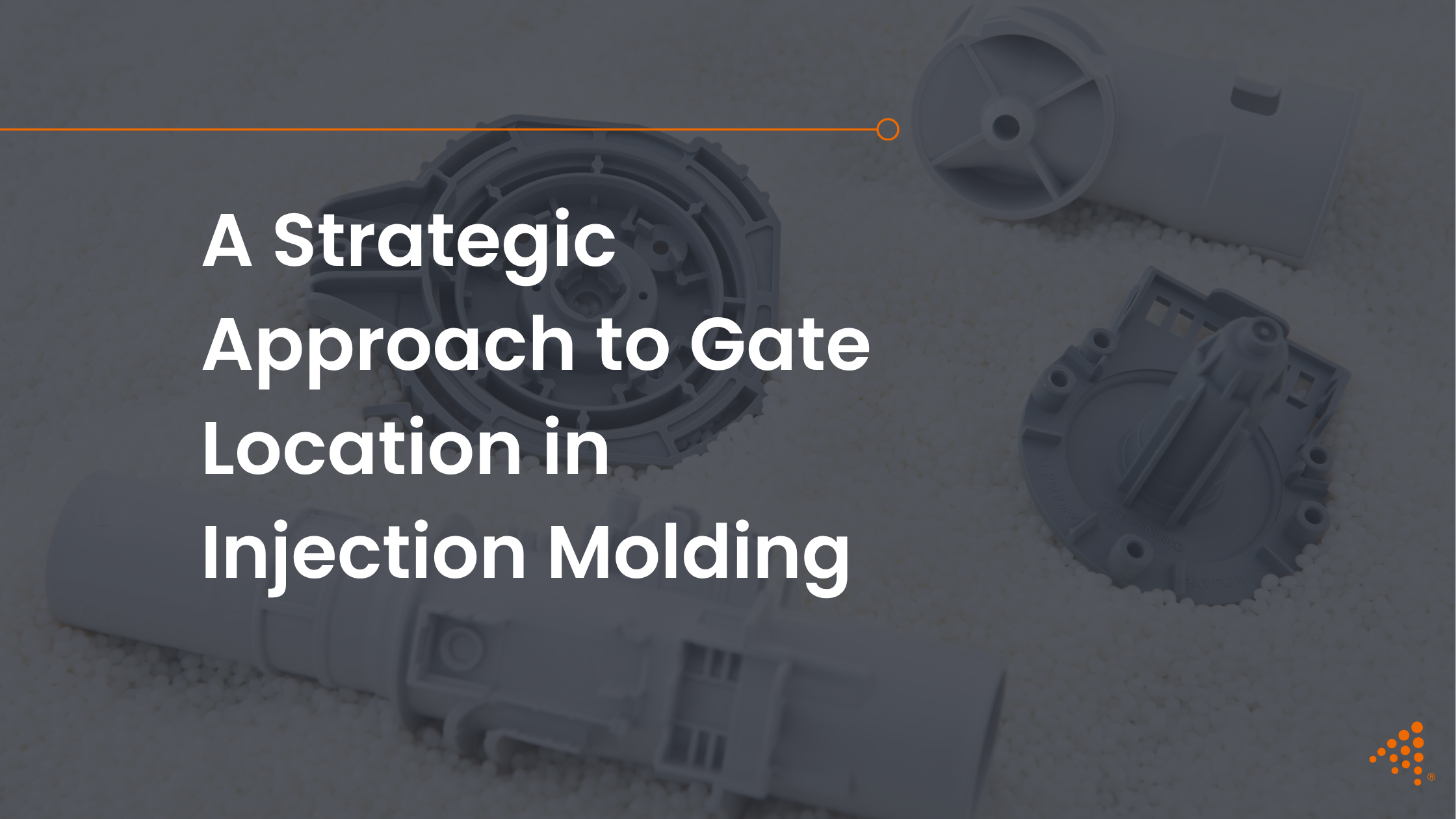
The journey from a plastic pellet to a finished, high-precision component is a marvel of controlled chaos. At the heart of this transformation is the moment molten polymer, under immense pressure, surges into the steel mold. The precise point where this material enters the mold cavity is known as the gate, and its location is one of the most consequential decisions in the entire injection molding process. Far from being an afterthought, gate placement is a strategic choice that profoundly influences a part's structural integrity, cosmetic appearance, and overall manufacturability.
A properly positioned gate is the foundation of a stable and repeatable process, guiding the plastic to fill the cavity predictably and uniformly. Conversely, a poorly chosen gate location can be the root cause of a host of molding defects, leading to wasted material, increased cycle times, and compromised part performance. Understanding the factors that guide this decision is fundamental for any company looking to produce high-quality plastic parts, especially in demanding fields like Medical Injection Molding and DFM for Medical Devices, where perfection is the standard.
Within the injection mold, the runner system is a network of channels that directs molten plastic from the machine's nozzle toward the part cavity. The gate is the final, typically restricted, opening in this system through which the plastic flows to fill the shape of the part. Its design and location serve a dual purpose. First, it provides a controlled entry point for the material. Second, after the part is filled and packed, the small size of the gate allows the plastic within it to solidify, or "freeze," quickly. This effectively seals the cavity and allows the screw to retract for the next shot while the part cools, separating the finished component from the runner system. This small feature dictates the flow path of the material, the pressure required to fill the part, and where the final piece will need to be separated from its delivery network.
Read More About LOCTITE® 3843 Resin: Durable Matte Black Finish
The primary consideration for gate placement is how it will affect the flow of plastic into the mold. The ideal filling pattern is a single, uninterrupted flow front that moves smoothly through the cavity. To achieve this, a common best practice is to gate into the thickest cross-section of the part. This allows the material to flow from thick to thin sections, which helps maintain pressure throughout the cavity during the packing phase. Placing a gate in a thin area can cause the material to freeze off prematurely, preventing sufficient packing pressure from reaching thicker sections and potentially causing voids or sink marks.
A well-placed gate also helps avoid jetting, where the material shoots across the cavity like a string instead of creating a progressing flow front. This is where Plastic Part Design Optimization becomes critical—ensuring proper flow, part strength, and aesthetics.
Every gate will leave a mark, known as a vestige, where it is removed from the part. The size and appearance of this vestige depend on the type of gate used, but its presence is unavoidable. Therefore, a vital consideration is placing the gate in a location that is either non-cosmetic or non-functional.
For a medical instrument, for example, the gate should not be located on a handle's gripping surface or near a functional tip. The vestige could be a point of irritation, interfere with assembly, or create a microscopic crevice that is difficult to sterilize. Careful planning allows this blemish to be hidden on an internal surface or an area that will be covered by another component in the final assembly. Injection mold design services help ensure these choices align with both performance and manufacturability.
When the molten plastic flows around an obstacle or when multiple gates are used, the flow fronts must eventually meet and fuse back together. The seam where they meet is called a weld line. These lines can represent structural weak points in the part.
Strategic gate placement, supported by injection molding tooling expertise and advanced design for manufacturing services, can minimize weld lines in high-stress areas.
As plastic cools, it shrinks. If this shrinkage is not uniform across the part, internal stresses can cause warpage. The gate’s location determines where packing pressure is applied to counteract shrinkage. Centralized gates typically promote uniform shrinkage, while long parts may benefit from gates positioned at the ends.
Air must be evacuated as plastic fills the mold cavity. If improperly gated, air can become trapped, leading to burns or incomplete parts. Injection molding quality control processes and simulation tools help engineers ensure that air escapes through strategic venting.
Want to Reduce Manufacturing Risk?
Explore Aprios’ custom manufacturing services and molding services with simulation-backed DfM strategies.
In the past, determining the best gate location relied heavily on the experience of mold designers. Today, advanced tools like Design for Injection Molding (DfIM) and Mold Flow Analysis enable precise prediction of fill patterns, weld lines, and air traps before any tool is cut.
At Aprios, our engineering team combines 3D Printed Prototypes, Rapid Prototyping Services, and DFM services with powerful simulations to optimize every gate location. By combining experience with cutting-edge software, we provide precise tooling solutions and reliable plastic injection mold design services that reduce risk and improve manufacturability.
Gate placement is far more than a technical detail—it is the foundation of successful Custom Injection Molding Solutions. From flow behavior and aesthetics to shrinkage and weld lines, every decision impacts performance, quality, and cost. By leveraging design for manufacturing solutions, simulation tools, and deep expertise, Aprios ensures that your next project is optimized for success.
Medical injection molding is a critical process that enables designers to prototype and manufacture a wide range of products for the medical, dental,...
Injection molding is an essential manufacturing process for producing high-quality, precision medical components where device reliability and patient...
Plastic injection molding is one of the most widely used manufacturing processes for producing plastic parts, valued for its efficiency, scalability,...