Streamlined Tooling for Cost-Effective Production of Part Variants
When product lines expand to include multiple variations of a part, the question of tooling investment becomes a primary consideration. For companies...
7 min read
Nick Erickson : Dec 16, 2025 9:30:00 AM

Bringing a new product to market is a complex balancing act. Innovation must be weighed against the pressures of time-to-market and, most significantly, cost. Often, the most substantial and immovable costs are locked in long before the first piece of production equipment is powered on. They are embedded within the product's initial design. This is where a proactive strategy, known as Design for Manufacturing (DFM), shifts from being a line item in a budget to a powerful tool for financial optimization. Integrating DFM principles at the earliest stages of development is a pivotal financial decision that can lead to profound savings in both the initial tooling investment and the long-term cost of production for injection molded parts.
Design for Manufacturing is the methodical process of designing products with the specific goal of making them easy and efficient to manufacture. The ultimate aim is to create a better product at a lower overall cost by considering the capabilities, limitations, and efficiencies of manufacturing processes from the very beginning. This represents a fundamental shift away from the traditional "over-the-wall" engineering approach, where a design is finalized in a silo and then passed to the manufacturing team, often leading to a cycle of expensive and time-consuming revisions when the theoretical design collides with the practical realities of production.
DFM is an inherently collaborative process. It brings together product designers, materials specialists, and manufacturing engineers to review and refine a design. For plastic injection molding, this means analyzing every feature of a part to anticipate how it will behave within the steel confines of a mold. It’s about optimizing the core function and aesthetic of a design. Through this lens, subtle changes to geometry, material selection, or feature integration can be made that have an outsized impact on the efficiency, quality, and cost-effectiveness of the final manufacturing process.
Ready to optimize your product design? Contact Aprios today for expert DFM services and reduce your manufacturing costs by up to 30%.
The injection mold, often called the tool, is typically the single largest capital expenditure in a plastic molding project. Its complexity is a direct reflection of the complexity of the part it is designed to produce. Therefore, the most direct path to controlling tooling costs is by simplifying the part design without sacrificing its intended function. Early DFM analysis is the key to unlocking these savings before a single piece of steel is cut.
In the world of injection molding, complexity carries a hefty price tag. Features that seem simple in a Computer-Aided Design (CAD) model, such as undercuts, sharp internal corners, or unnecessary texturing, can dramatically increase the cost and complexity of the mold. Undercuts, which are features that prevent a part from being directly ejected from the mold, necessitate the use of mechanical side-actions or lifters. These are intricate, moving components within the mold that add to the initial build cost, increase the potential for maintenance issues, and can slow down the production cycle. A thorough DFM review can often identify clever ways to modify a design to eliminate an undercut, perhaps by adding a slot or changing the parting line, achieving the same functional goal with a much simpler, more robust, and less expensive tool.
One of the foundational principles of DFM for injection molding is maintaining a uniform wall thickness throughout the part. When a part has both thick and thin sections, the molten plastic cools at different rates. The thicker sections cool more slowly, which can lead to defects such as sink marks (surface depressions), voids (internal bubbles), and warpage. Correcting these issues after the fact is costly. It might involve complex cooling channels within the mold to try and normalize the temperature, or it could require significantly longer cycle times to allow the thick sections to cool properly. Both solutions drive up the cost of production. DFM establishes an optimal and consistent wall thickness during the initial design phase, which promotes uniform cooling, minimizes defects, and allows for a more efficient and predictable manufacturing process.
Read More About Guide to Polypropylene (PP): A Versatile Material for Manufacturing
A draft angle is a slight taper applied to the vertical walls of a part in the direction of the mold's opening. This taper is essential for allowing the solidified part to be ejected cleanly from the mold without being damaged or causing excessive wear on the tool. Designing a part with insufficient or non-existent draft angles can lead to parts sticking in the mold, causing scuff marks on the part surface and placing immense stress on the ejection system. This can lead to production delays and, in severe cases, damage to the costly mold itself. DFM specifies appropriate draft angles from the very beginning, a simple geometric consideration that prevents a host of expensive problems on the production floor.
The choice of plastic resin has far-reaching consequences for both the part's performance and the mold's design. Different polymers behave differently; they flow at different rates, require different processing temperatures, and, most importantly, have unique shrink rates. As the plastic cools and solidifies in the mold, it shrinks. The mold is built slightly larger than the final part specifications to account for this shrinkage. If a material is chosen late in the process, or if the material is changed after the tool has been built, the original shrink rate calculations are no longer valid. This can result in parts that are dimensionally incorrect and out of tolerance, often requiring expensive and time-consuming modifications to the steel mold. DFM integrates material selection into the early stages of design, ensuring the tool is precisely engineered for the specific properties of the chosen resin.
While DFM provides substantial upfront savings on tooling, its financial benefits continue to accumulate throughout the entire production run. By designing a part for manufacturing ease, the efficiency of the entire process is enhanced, leading to lower per-part costs and higher quality yields.
In high-volume injection molding, the cycle time (the total time it takes to close the mold, inject the plastic, cool the part, open the mold, and eject the part) is a primary driver of the final part cost. Even a reduction of a few seconds per cycle can translate into substantial savings over a production run of hundreds of thousands or millions of parts. DFM principles directly contribute to shorter cycle times. For instance, optimized uniform wall thickness allows for quicker and more predictable cooling, which is often the longest phase of the cycle. Similarly, proper draft angles and a well-placed parting line allow for smooth and rapid ejection, minimizing the time the mold needs to remain open.
A part designed without manufacturing considerations is a part that is prone to defects. Flash is excess material that seeps out of the mold cavity, typically at the parting line. This defect often indicates a poor seal between the two mold halves, which can be caused by a poorly designed parting line or processing parameters that are compensating for design flaws. DFM helps mitigate the risk of flash and other common defects like short shots, sink marks, and weld lines by optimizing gate locations, ensuring proper venting, and establishing uniform wall thickness. Every part that has to be scrapped due to a defect represents wasted material, machine time, and labor—all direct costs that a robust DFM process helps to minimize.
Design for Assembly (DFA) is a crucial subset of DFM that focuses on the end of the production line. If a final product consists of multiple components that need to be assembled, the design of each individual part can have a massive impact on the efficiency and cost of that assembly process. Early DFM and DFA analysis can identify opportunities to simplify this final step. This could involve incorporating features like snap-fits to eliminate the need for screws or adhesives, designing self-aligning features to make assembly quicker and more foolproof, or even consolidating multiple parts into a single, more complex molded component. Each step that can be removed from the assembly process reduces labor costs, decreases the potential for human error, and accelerates the time-to-market.
A part that is easy to mold places less stress on the injection molding tool over its operational life. Designs that rely on intricate or delicate mold actions, such as complex lifters or slides to form undercuts, create areas within the tool that are more susceptible to wear, fatigue, and potential breakage. These high-maintenance features can lead to unplanned production downtime and costly tool repairs.
Through DFM, designers and engineers can identify these high-risk features and collaboratively find alternative solutions. By simplifying the part geometry, the resulting tool is often more robust and reliable. It requires less preventative maintenance and is less likely to suffer from catastrophic failure, extending its useful production life. This long-term reliability avoids the significant unforeseen costs associated with tool repair and the subsequent loss of production capacity, protecting the initial investment and delivering greater value over time.
The DFM process is not a single event but a collaborative journey that begins the moment a client shares their initial concept or CAD model. At its heart is a detailed analysis, often powered by sophisticated simulation software. Mold Flow Analysis is a key tool in this process, creating a virtual simulation of how molten plastic will flow through the runner system and fill the mold cavity. This analysis can predict potential problems such as air traps, problematic weld lines where two flow fronts meet, or areas that may not fill completely before any investment is made in tooling.
The results of this analysis fuel a collaborative feedback loop. Manufacturing experts work hand-in-hand with the client’s design team, not to dictate changes, but to suggest modifications that will enhance manufacturability while preserving the part's critical functional and aesthetic requirements. It is this iterative process of review, analysis, and refinement that unlocks the full cost-saving potential of DFM, turning a good design into a great, manufacturable product.
At Aprios, our design for manufacturing services and plastic injection mold design services are foundational to creating efficient and cost-effective manufacturing solutions. As a leading design and manufacturing company, we offer comprehensive DFM services, including Design for Injection Molding (DfIM), DFM for Medical Devices, and plastic part design optimization. Our injection molding services encompass everything from prototype injection molding to low-volume injection molding and custom injection molding solutions.
We provide end-to-end manufacturing services, including precise tooling solutions, injection molding tooling, rapid prototyping services, and secondary manufacturing processes. As an ISO-Certified Manufacturing Company offering FDA-Compliant Manufacturing and ISO 13485 Injection Molding capabilities, we ensure the highest quality standards with rigorous injection molding quality control throughout every project.
By collaborating with you at the earliest stages, we help refine your design to minimize tooling costs, streamline production, and deliver high-quality parts. Our expertise extends to medical injection molding, insert molding for medical devices, overmolding services, and precision manufacturing services.
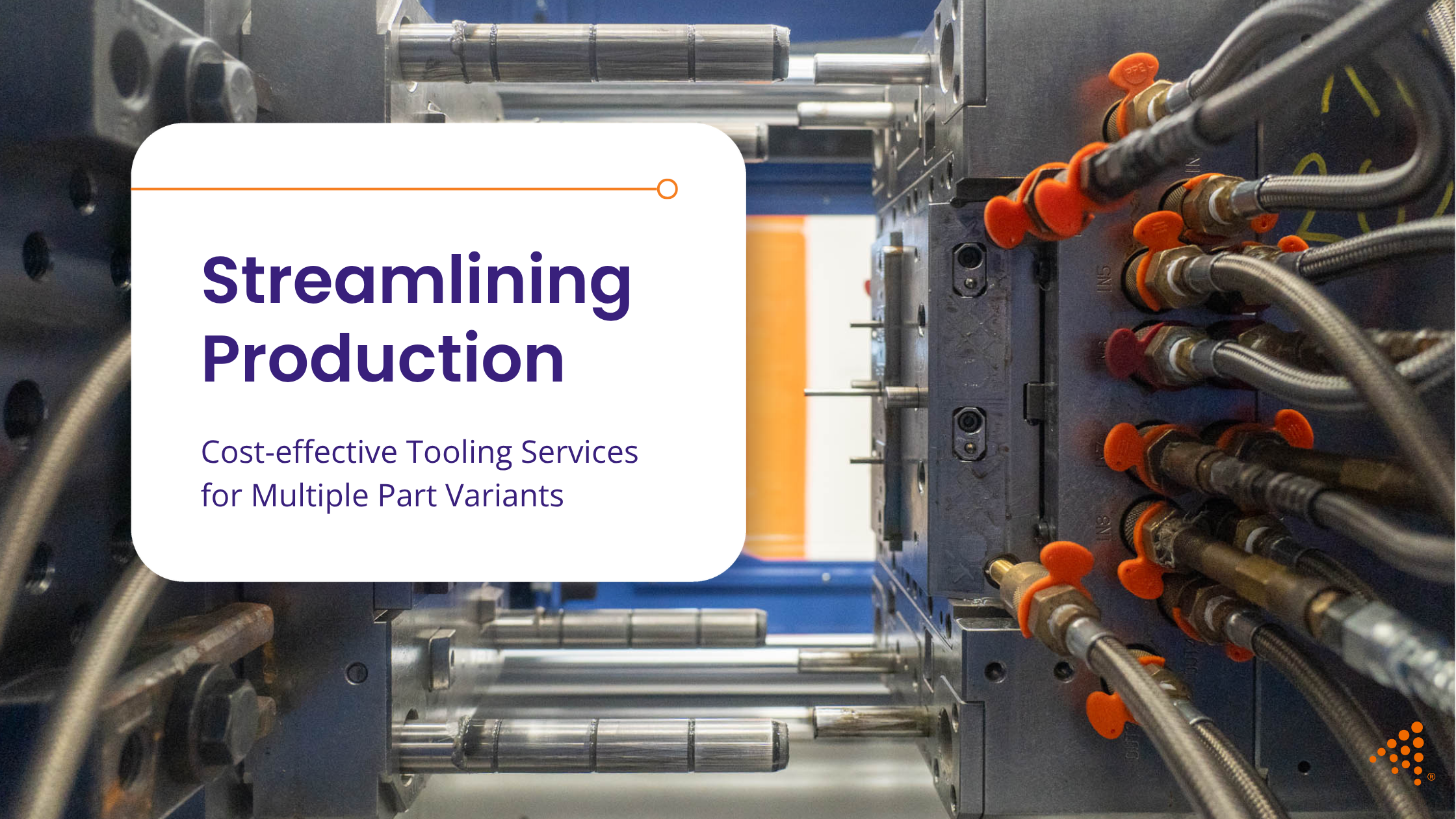
When product lines expand to include multiple variations of a part, the question of tooling investment becomes a primary consideration. For companies...

The journey of bringing a medical device from a brilliant concept to a market-ready product is fraught with complexities. Every decision, from the...

In the world of custom manufacturing, particularly for high-precision industries like medical devices and aerospace, the injection mold is a...