Creating a Reliable Dimensional Process Window in Injection Molding
Defining the range where part dimensions stay consistent and in tolerance From Data to Control A molding process isn’t proven by a single successful...
2 min read

Cooling performance depends on more than just temperature. How coolant moves through the mold determines how effectively heat is removed.
Two systems can run at the same temperature but produce different results if their flow behavior isn’t the same.
The Reynolds number (Re) describes how fluid flows through a channel by comparing momentum to internal resistance.
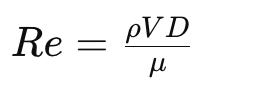
It combines fluid properties and flow conditions into a single value that predicts whether flow will be smooth or mixed.
Flow behavior falls into three categories.
Laminar flow occurs at low Reynolds numbers, where fluid moves in smooth layers with little mixing.
Transitional flow sits between stable and chaotic behavior, where performance can vary.
Turbulent flow occurs at higher Reynolds numbers, where the fluid mixes continuously.
These differences directly affect how heat is removed from the mold.
In laminar flow, the coolant closest to the mold wall heats up and stays there, reducing the temperature difference needed for efficient heat transfer.
Turbulent flow constantly mixes the fluid, bringing cooler liquid into contact with the mold surface. This maintains a strong temperature gradient and improves heat removal.
You end up with faster cooling, more uniform mold temperature, and more consistent part dimensions.
If flow remains laminar or inconsistent, cooling becomes uneven.
Hot spots develop where heat isn’t removed efficiently. These areas cool more slowly, leading to uneven shrinkage and dimensional variation.
That imbalance often shows up as warpage, sink, or cycle instability.
Reaching turbulent flow depends on several factors working together.
Increasing coolant velocity raises the Reynolds number. Adjusting channel diameter can improve flow characteristics, though too small a diameter can restrict overall flow. Lower viscosity fluids, like water, promote turbulence more easily than thicker fluids.
System design also matters. Long or restrictive circuits reduce flow velocity, making it harder to maintain turbulent conditions.
Different coolants behave differently under flow.
Water provides low viscosity and strong heat transfer, making it ideal for most applications. Water-glycol mixtures offer protection but slightly reduce efficiency. Oils, used in high-temperature applications, tend to resist turbulent flow due to higher viscosity.
Choosing the right fluid supports consistent cooling performance.
Temperature difference between inlet and outlet coolant provides a quick check on performance.
A large temperature rise often indicates slow flow or poor heat removal. Monitoring this alongside flow conditions helps identify imbalance before it affects part quality.
Cooling performance is validated through measured flow behavior.
Reynolds number, flow rate, and temperature change are all tracked to confirm that each circuit operates in a stable, efficient range. Systems are adjusted until heat removal is consistent across the mold.
That control leads to predictable cooling, stable dimensions, and a process that performs the same way from cycle to cycle.

Defining the range where part dimensions stay consistent and in tolerance From Data to Control A molding process isn’t proven by a single successful...

A unified approach to validation, production, and continuous improvement built on a single source of truth
In injection molding, cooling is the final step in the process—but it has a major impact on the final part.