How Process Data Helps Solve Injection Molding Problems
Injection molding problems are often solved the same way they start—with adjustments.
2 min read
The injection screw does more than move material forward. It melts, mixes, and conditions the polymer before it ever reaches the mold.
That preparation defines how consistent the melt is. If the melt isn’t uniform, no downstream adjustment can fully correct it.
A standard screw is divided into three functional sections.
The feed zone conveys solid pellets forward and begins compression.
The transition zone applies shear and heat to melt the material.
The metering zone stabilizes and homogenizes the melt before injection.
Each zone contributes to how evenly the material is processed.
Compression ratio controls how aggressively the material is melted.
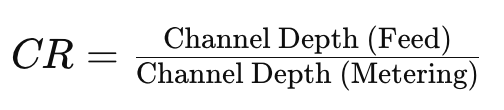
Lower ratios provide gentler melting for heat-sensitive materials. Higher ratios increase shear and speed up melting but can introduce degradation if excessive.
Matching this ratio to the material keeps melting consistent without damaging the polymer.
Plasticating rate determines how quickly the screw can prepare the next shot.
It depends on screw diameter, rotation speed, material viscosity, and temperature. The goal is to complete screw recovery within the cooling phase.
If recovery takes too long, material sits in the barrel under heat. This increases residence time and can lead to degradation.
Back pressure controls how the material is mixed during screw recovery.
Higher back pressure improves melt uniformity and dispersion of additives or colorants. At the same time, it increases shear and temperature.
This creates a balance. Enough pressure is needed for consistent mixing, but too much can degrade the material.
Some screws include additional mixing features.
Elements like Maddock or spiral mixers improve temperature uniformity and blend additives more effectively. Barrier screws separate solid and molten material to improve melting efficiency.
These features improve consistency but also increase residence time, which must be managed carefully.
Over time, screw and barrel wear changes how material is processed.
Worn components reduce compression and mixing efficiency. This leads to inconsistent melt quality, longer recovery times, and variation in shot size.
The difference shows up in part consistency and process stability.
Screw design must align with the material and application.
Resin type, sensitivity to heat, and need for mixing all influence the optimal configuration. A design that works for one material may not perform well for another.
Selecting the right screw ensures the melt entering the cavity behaves consistently every cycle.
Screw design and plasticating conditions are defined during process validation.
Compression ratio, back pressure, and screw speed are selected based on material behavior and verified through testing. These parameters are documented and maintained across production.
That control keeps melt quality consistent, supporting stable processing and predictable part performance.
Injection molding problems are often solved the same way they start—with adjustments.
Measuring what the part actually experiences inside the mold Looking Inside the Cavity Most machine settings track what the press is doing, not what...