The Science Behind Consistent Injection Molding
Scientific molding is the application of polymer science, mechanical engineering, and statistical process control to injection molding. It replaces...
5 min read
Nick Erickson : Jul 9, 2026, 1:38:00 PM

Consistency in manufacturing isn’t just about operations. It’s what separates dependable suppliers from risky ones.
Whether it’s a prototype or full-scale production for regulated products, the expectation is the same: every part should come out the same, every time.
That consistency leads to predictable quality, faster validation, lower scrap and rework, and stronger confidence from both regulators and customers.
At Aprios, it isn’t left to chance. It’s built into the process through scientific molding.
Consistency isn’t about parts looking identical on the surface. It comes from stability in how the material flows, packs, and cools inside the mold.
A stable process includes:
Defined nominal settings based on measured data
Clear limits for acceptable variation
Continuous monitoring to catch drift early
Documented responses when something moves out of range
It works as a closed loop, where the process holds itself steady instead of relying on operator adjustments.
Related Reading: The Science Behind Consistent Injection Molding - how polymer science and statistical control combine to create a stable, repeatable process.
Quality comes from process stability, not final inspection.
When key variables stay controlled, results follow:
Melt temperature stays stable, so flow is predictable instead of causing flash or short shots
Cavity pressure remains consistent, leading to uniform density and dimensions
Cooling stays controlled, reducing variation in shrinkage
Gate seal timing holds steady, keeping part weight and packing consistent
When these factors don’t shift, parts stay within spec without constant correction. The focus moves away from fixing defects and toward preventing them.
Is your current process producing consistent results or reacting to variation?
Aprios offers free process reviews for manufacturers dealing with quality or consistency challenges.
Small changes can create big problems.
A slight shift in hold pressure or a few degrees in mold temperature can change part dimensions, weight, or internal stress. That can lead to assembly issues or rejected parts later on.
The impact shows up in scrap, lost production time, delayed shipments, added validation work, and strained customer relationships.
In regulated industries, it can also create compliance risk.
In medical device manufacturing, a single out-of-spec lot can trigger a full CAPA investigation, delay product launch, or require revalidation that costs more time than the original process development. That is not a worst-case scenario, it is a predictable consequence of running without a defined, monitored process.
Scientific molding replaces guesswork with measurable relationships.
By studying how variables interact, engineers can predict outcomes instead of reacting to them.
This includes:
Rheology studies to understand flow behavior
Cavity pressure data to confirm shot-to-shot consistency
Gate seal and cooling studies to set packing and cycle time
SPC to track trends and catch variation early
These tools make consistency something you can measure and control.
Related Reading: Using DOE Results for Process Adjustments in Injection Molding - how validated experiment data translates into production settings.
In many cases, the same part runs on different machines or in different facilities. Without a defined process, each setup becomes a fresh trial.
With a scientific approach, the process can be transferred and repeated.
Aprios maintains consistency by:
Defining processes in measurable terms like pressure, speed, and fill time
Using cavity pressure for machine-independent verification
Digitally recording setup and performance data
Revalidating with defined process windows when conditions change
When Aprios transfers a validated process from one press to another, whether within the Minneapolis, MN facility or across to Vista, CA, cavity pressure targets and fill times are the reference points, not the original machine's controller settings. The process follows the data, not the equipment.
This keeps results consistent, no matter where production happens.
Related Reading: Aprios maintains consistent results across both Minneapolis, MN and Vista, CA facilities using digital process monitoring and validated process windows. See our injection molding process
Consistency also needs to be proven.
Standards like ISO 13485 and FDA requirements call for:
Defined process windows
Verified capability through Cp and Cpk
Ongoing monitoring with SPC
Traceable records tied to each lot
For medical device manufacturers, FDA registration and ISO 13485 certification both require documented evidence that a process is validated, monitored, and capable. Aprios holds both certifications across its Minneapolis, MN and Vista, CA facilities - which means every process we develop is already built to satisfy those documentation requirements, not retrofitted to meet them.
Without a stable process, those requirements don’t hold up.
Related Reading: Understanding IQ, OQ, and PQ: Essential Steps in Medical Injection Molding - how validation requirements translate into process documentation for regulated industries.
Customers want suppliers they can trust without constant oversight.
A consistent process makes that possible. It reduces risk during new program launches, tooling transfers, and production scale-ups. It also makes communication clearer because decisions are based on data, not assumptions.
Reliability builds trust, and that trust becomes a competitive edge.
Aprios approaches consistency with structure:
Process windows defined through DOE
Qualified equipment and molds before production
Continuous SPC monitoring of key variables
Alignment across Engineering, Quality, and Production
Digital traceability linking every shot to its data
The result is a process that holds. Parts meet spec in month one and month twelve, because the parameters that produce them are understood, controlled, and documented - not assumed.
The goal is simple: consistent results, every day.
Related Reading: Why Process Monitoring Matters More Than Visual Inspection - why data-driven monitoring catches problems before they reach final inspection.
Want This Done For You?
Aprios' injection molding team handles process development from viscosity study through DOE validation. Every process leaves our floor with documented parameters and a defined process window.
Process consistency in injection molding means producing parts within specification on every cycle, not just on average. It requires stable, measurable parameters (melt temperature, cavity pressure, fill speed, cooling time) held within defined limits, with continuous monitoring to detect and respond to drift before it causes defects. A consistent process produces the same outcome regardless of operator, shift, or machine.
Consistency is what converts process capability into reliable output. When parameters stay controlled, defects are prevented rather than detected after the fact. This reduces scrap, shortens validation cycles, lowers rework costs, and gives customers and regulators confidence that every part was produced the same way. In regulated industries, consistency is not optional, it is a compliance requirement.
Common causes include material variation (moisture content, viscosity changes), machine drift (barrel temperature, screw wear), environmental changes (ambient temperature, humidity), and operator-dependent adjustments made without data. Scientific molding addresses these systematically by establishing validated process windows with defined acceptable ranges and monitoring systems that detect changes before they affect part quality.
Scientific molding improves consistency by replacing intuition with measurable cause-and-effect relationships. Through structured studies (viscosity, gate seal, cooling, DOE), engineers establish validated process windows where the mold reliably produces conforming parts. SPC and cavity pressure monitoring then track performance continuously, allowing variation to be detected and addressed before defects occur.
Yes, with a scientific approach. Processes defined in measurable terms (pressure, fill time, temperature) rather than machine-specific settings can be transferred and replicated. Cavity pressure sensors provide machine-independent verification that the process is performing within the validated window, regardless of equipment brand or location.
Regulated industries require documented evidence that a process is consistent and capable. This includes a defined process window, capability data (Cp and Cpk), ongoing SPC monitoring, and traceable records linking each production lot to its process data. Standards like ISO 13485 and FDA regulations build these requirements directly into quality management systems.
Aprios builds consistency through structured process development — using DOE to define process windows, qualifying equipment and molds before production, and monitoring key variables continuously with SPC. Process data is digitally recorded and linked to each production lot. This approach applies across both Minneapolis, MN and Vista, CA facilities, so results are repeatable regardless of where production runs.
Dive deeper into how variation is defined and controlled within a scientific molding process:
→ The Five Pillars of a Robust Process

Scientific molding is the application of polymer science, mechanical engineering, and statistical process control to injection molding. It replaces...
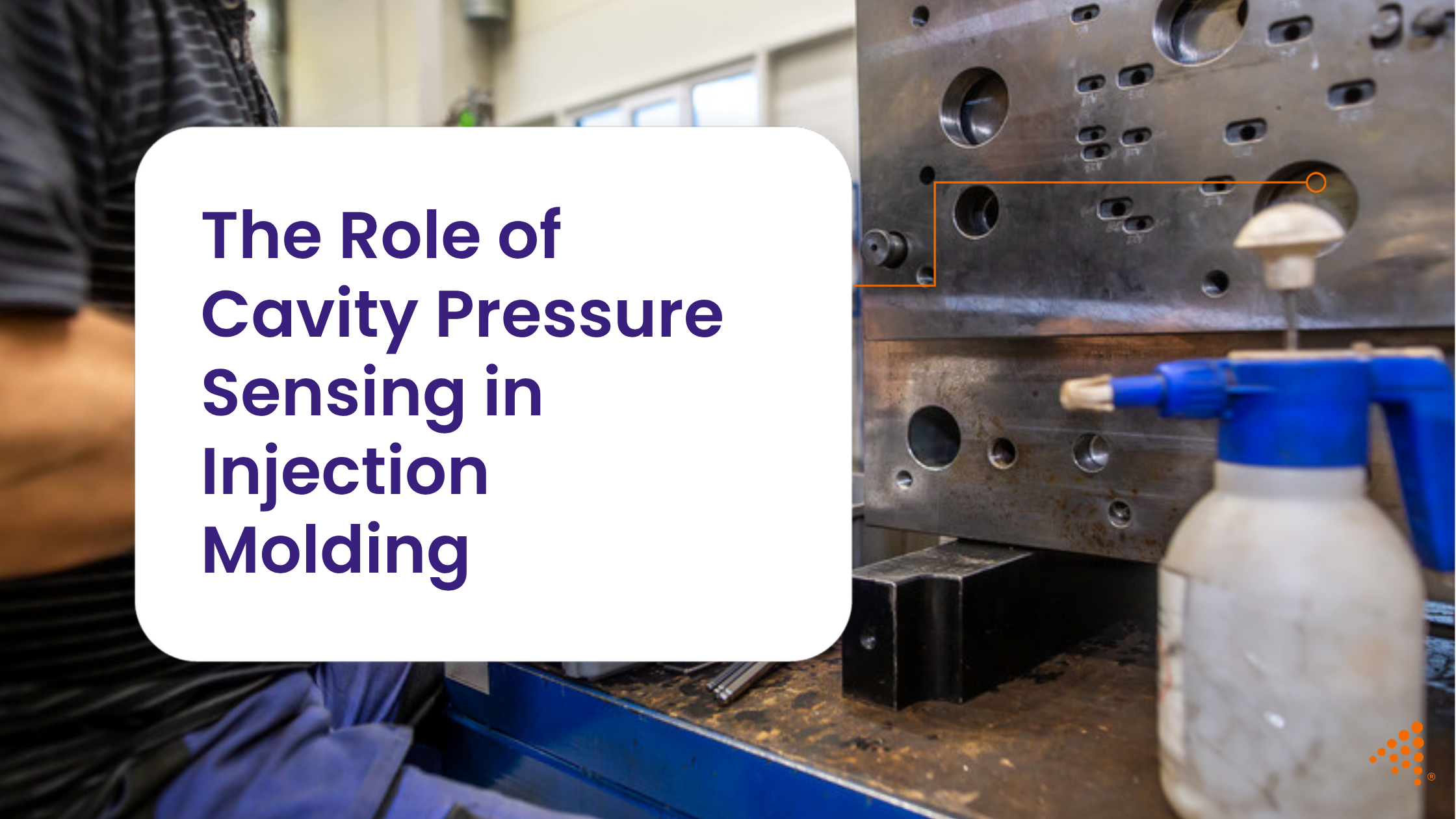
Measuring what the part actually experiences inside the mold Looking Inside the Cavity Most machine settings track what the press is doing, not what...

In injection molding, defects are a fact of life.