Optimizing Clamp Force and Shot Size in Injection Molding
Validating machine setup to ensure stable filling and part quality How These Two Relate to One Another Clamp force and shot size define whether the...
2 min read

Engineers begin by setting baseline molding
parameters such as melt temperature, mold temperature, and injection velocity.
These settings should represent reasonable operating conditions for the material.
The machine is then programmed to inject progressively larger shot sizes.
The first shot may fill only a small portion of the cavity. Each subsequent shot fills slightly more of the part until the cavity becomes fully filled.
The resulting parts are arranged sequentially to visualize how the material flows through the mold.
This progression allows engineers to see the path the polymer takes as it fills the cavity.
Engineers analyze the sequence of parts to determine whether the cavity fills evenly and whether any flow restrictions are present.
This information becomes a valuable reference for later process development steps.
Short shot studies provide a visual record of polymer flow behavior.
During analysis, engineers typically evaluate several characteristics.
The shape of the advancing flow front can reveal whether the material spreads smoothly or experiences uneven distribution.
In molds with multiple cavities, engineers compare how quickly each cavity fills.
Balanced filling is essential for maintaining consistent part quality across cavities.
Short shots may reveal areas where air could become trapped as the mold fills, potentially leading to burn marks or incomplete filling.
Sections of the part that fill more slowly than others may indicate regions where the polymer experiences increased resistance.
Short shot studies are one of the first steps in scientific molding because they provide insight into how the material interacts with the mold geometry.
Rather than immediately focusing on machine settings, engineers use short shot testing to understand the natural flow behavior of the polymer.
This information helps guide later process development steps, including:
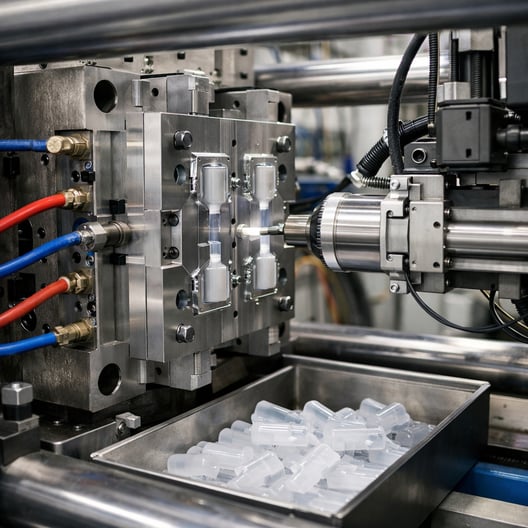
Together, these tests help engineers build a stable process window that supports repeatable production.
Short shot studies are especially valuable because they allow engineers to identify potential molding issues before full production begins.
By analyzing fill patterns early in the process development phase, engineers can detect problems such as:
Addressing these issues during process development helps prevent costly troubleshooting during production.
Injection molding is often described as a balance between material behavior, tooling design, and machine control.
Short shot studies provide one of the clearest windows into how these factors interact during the earliest stage of the molding cycle.
For engineers developing new molding processes, this insight is essential.
By revealing how molten polymer flows through the mold, short shot analysis helps transform injection molding from a trial-and-error process into a structured engineering discipline.
Within scientific injection molding, short shot studies represent one of the first steps toward building a predictable and repeatable manufacturing process.
Validating machine setup to ensure stable filling and part quality How These Two Relate to One Another Clamp force and shot size define whether the...

Injection molding defects can present significant challenges. Among the most definitive of these is the "short shot," a term for a part that has not...

Measuring what the part actually experiences inside the mold Looking Inside the Cavity Most machine settings track what the press is doing, not what...